
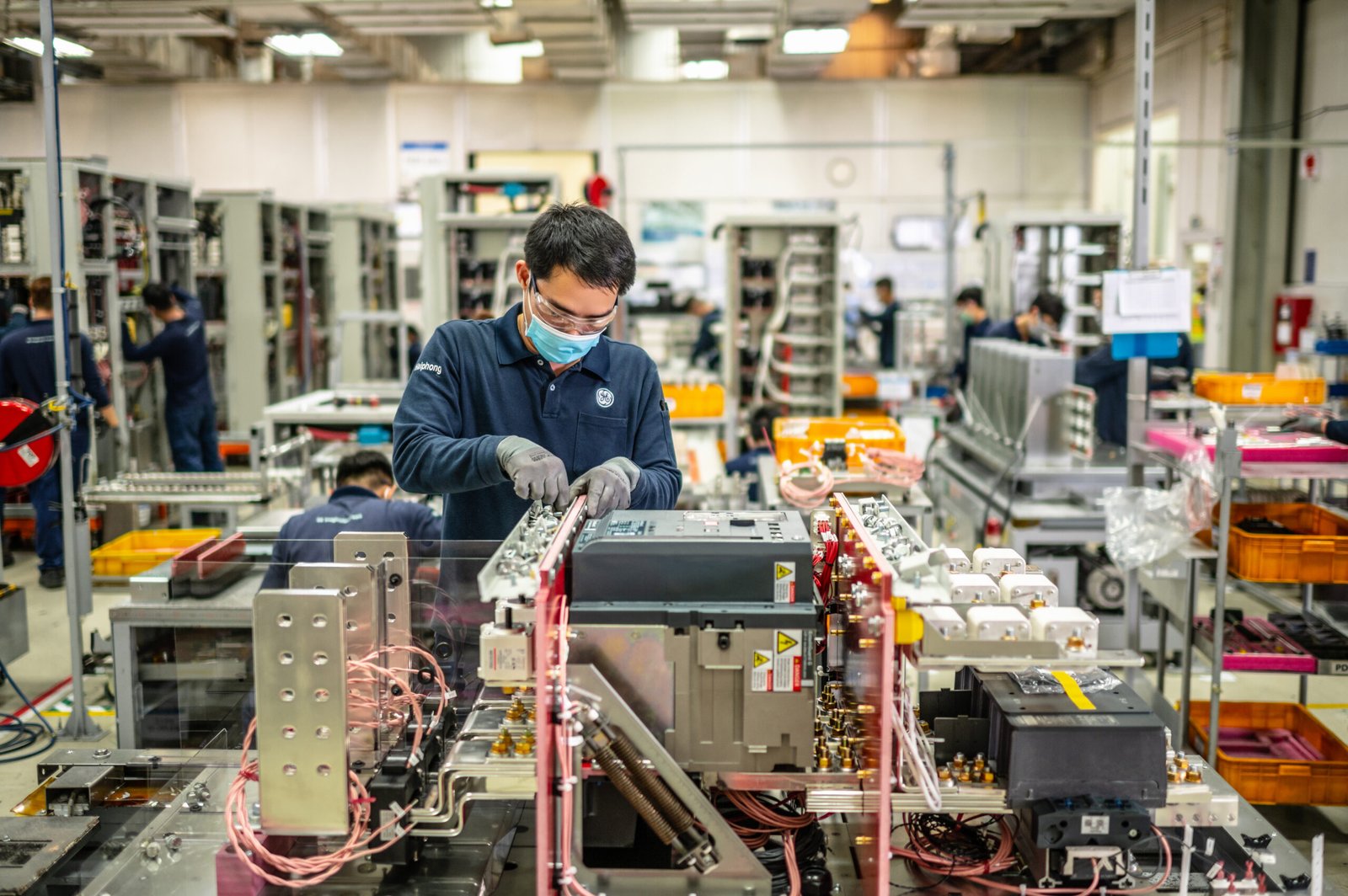
Factory photography is a photo set capturing the production facilities, technology lines, and operations teams of industrial enterprises. Unlike office photography, factory photography requires complex lighting technique, industrial storytelling skill, and an understanding of occupational safety regulations.
A high-quality factory photo set serves ESG reports, export brochures, corporate websites, and employer-brand campaigns. Real-life case study: GE Energy Hai Phong at Gạo Nâu Profile, 2023.
5 main purposes of factory photography

1. ESG report (Environmental, Social, Governance)
ESG reports need photos that show:
- Environmental: Energy-saving machinery, waste treatment, greenery around the factory
- Social: Safe workers, training, neighboring communities
- Governance: Quality control processes, transparent management
ESG photos are not just “pretty pictures” — they require intentional storytelling.
2. Export brochures
International clients need to see:
- Factory scale (area, capacity)
- Modern equipment
- Professional engineering teams
- International certifications (ISO, CE, FDA)
3. “Our Facility” page on the website
The About section of a corporate website needs:
- Overall factory shots (drone or wide angle)
- Close-up production line shots
- Photos of operating engineers
- B-roll video for the intro section
4. Employer branding
For factories recruiting 1,000+ workers, photography is an important marketing tool:
- Safe, clean working environment
- Proud, happy workers
- Modern facilities
5. Press and media
When being interviewed or featured, high-quality factory photos help the story land better.
Factory photography process — 6 steps
Step 1 — Pre-shoot site survey (1-2 days)
The photographer visits beforehand to map out:
- Factory layout, paths between workshops
- Areas open for photography vs. restricted areas
- Operating hours of each production line
- Light sources (windows, LED lighting, skylights)
- Safety risks (heat, chemicals, high voltage)
Step 2 — Prepare attire and documents
- Occupational safety certificate (from the company or a 3rd party)
- Protective gear: hard hat, reflective vest, safety shoes, safety glasses
- Mask if there is dust in the area
- Ear protection if noise exceeds 85dB
Step 3 — Brief with factory leadership
Before starting, hold a quick 30-minute meeting with:
- Factory director
- Head of safety
- Company communications representative
- To align on: shooting areas, timeline, specific rules
Step 4 — Shoot per the shot list
A standard shot list includes:
| Category | Photo count |
|---|---|
| Factory exterior (drone if available) | 5-10 |
| Main production line | 10-20 |
| Operating engineers (portraits at workstation) | 10-15 |
| Machinery close-ups | 15-20 |
| Warehouse and logistics | 5-10 |
| Quality control room | 5-10 |
| Worker rest area | 5-10 |
| Leadership + engineering team | 5-10 |
Total: 60-105 photos for a medium-sized factory.
Step 5 — Lighting technique
A factory typically has 3 mixed light sources:
- Natural light from skylights
- Overhead fluorescent lighting (yellow or white)
- Spot lights on machinery (red or green)
Photographers must manually white-balance and use fill flash for workers’ faces.
Step 6 — Post-processing
Factory photo retouching includes:
- Color balancing (especially when light sources mix)
- Cleaning dust and oil stains on the image (without overdoing it)
- Boosting contrast on machinery details
- Keeping worker portraits natural — no over-whitening of skin
Mandatory safety considerations
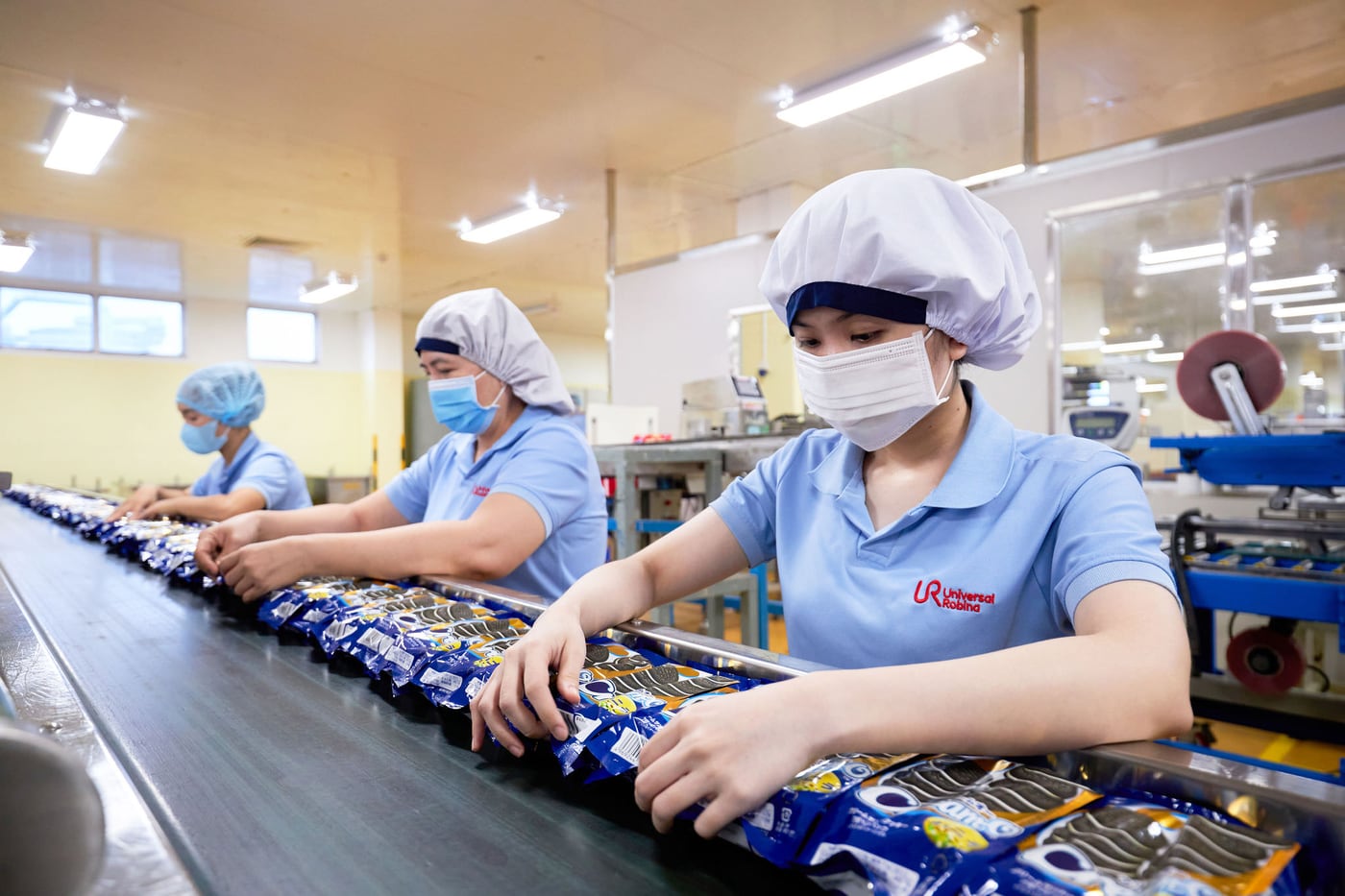
At an industrial factory, the photographer must adhere to:
| Rule | Specifics |
|---|---|
| Protective gear | Helmet, vest, shoes, glasses, gloves per zone |
| No entry into restricted areas | Follow signage |
| No shooting during line malfunctions | Safety first, no accident shots |
| No asking workers to stop machinery for shots | Only shoot during normal operation |
| No equipment blocking walkways | Keep emergency exits clear |
| No flash in chemical zones | May trigger sensors |
Case study — GE Energy Hai Phong factory
In 2023, Gạo Nâu Profile photographed the entire GE Energy Hai Phong factory, one of Vietnam’s largest wind turbine production facilities:
- Duration: 3 days
- Shoot areas: 5 workshops, operations office, logistics area
- Photo count: 120+ retouched photos
- Protective gear: Full GE Safety Standards compliance
- Difficulty: Mixed halogen and LED lighting, 90dB noise
- Result: Photos used for the 2023 ESG report and corporate website
See details at GE Energy Hai Phong Case Study.
Reference pricing
| Scale | Duration | Photo count | Price (VAT excl.) |
|---|---|---|---|
| Small factory (<100 workers, 1 workshop) | 1 day | 40-60 | 10-15 million VND |
| Medium factory (100-500 workers, 2-3 workshops) | 2 days | 80-100 | 20-30 million VND |
| Large factory (500-2,000 workers, 4+ workshops) | 3-5 days | 120-200 | 40-60 million VND |
| Industrial park complex | 1-2 weeks | 200+ | Contact for quote |
Prices include: site survey, equipment, protective gear, shooting, retouching, file delivery.
Contact
If your manufacturing business needs a factory photo set for an ESG report, brochure, or website, contact (+84) 775 243 530. We will survey and provide a quote within 48 hours.